
HVAC Growth
How HVAC Companies Lose Money on Bad Scheduling (and How to Fix It)
HVAC companies lose margin when dispatch, booking, tech availability, invoicing, and follow-up live in different tools. Here's how to fix the scheduling leaks before they hit cash flow.
۱۴۰۵/۴/۱ • Operations
Watch the workflow first
Video walkthrough
See how one connected workflow reduces admin and billing delays
Watch how scheduling, estimates, invoices, and payment follow-up can stay connected in one operational workflow for service teams.
Most HVAC companies do not lose money because demand is low. They lose money because the work between the phone call, the schedule, the technician, and the invoice is fragmented.
When dispatch lives in one place, staff availability in another, invoices in another, and client notes in text messages, small mistakes compound into lost revenue every week.
The hidden cost of bad scheduling in HVAC
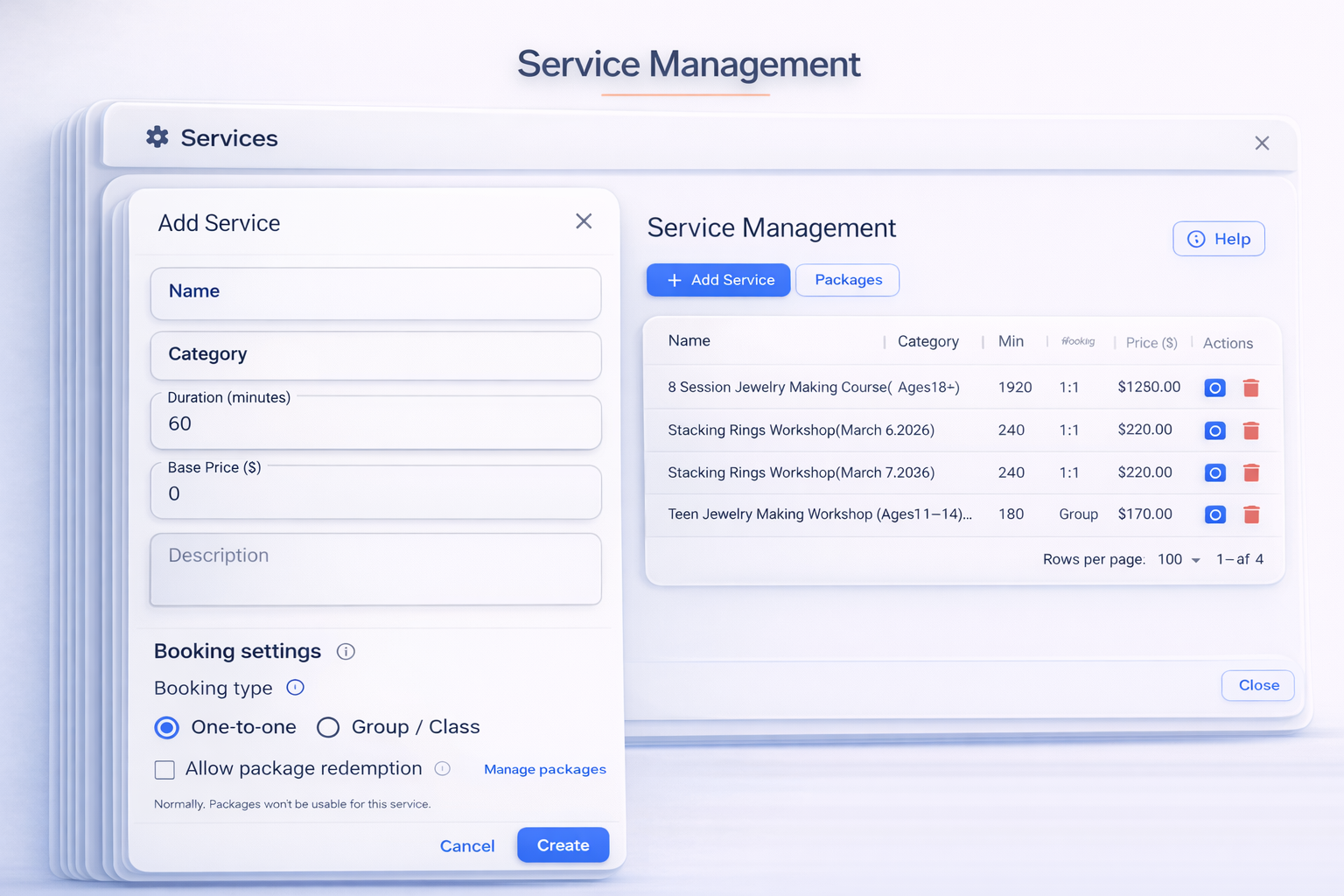
Bad scheduling is not just an inconvenience. It affects route efficiency, overtime, conversion from estimate to paid job, customer experience, and how quickly the office can bill completed work.
A technician who arrives late because the previous job ran long does not just create one unhappy customer. That delay can push back the next call, increase overtime, reduce same-day capacity, and force the office to manually explain what happened to multiple customers.
Multiply that by a week of peak summer or winter demand, and the real cost becomes obvious: less capacity, more stress, slower invoices, and lower margins.
Where HVAC companies usually leak profit
Manual dispatch boards and spreadsheet scheduling create avoidable conflicts. Double-booked technicians, long gaps between jobs, and reactive reshuffling waste the day before the first invoice is even sent.
Missed context is another profit leak. If the office does not see the full client history, equipment notes, last visit, unpaid invoice, and job status in one place, every repeat visit starts slower than it should.
Delayed approvals also hurt cash flow. An estimate sits in email, the customer does not respond, the tech is never scheduled, and the work stalls. Or the work gets done, but the invoice goes out late because operations and billing are disconnected.
Finally, poor follow-up reduces repeat maintenance revenue. If your team cannot easily rebook, send reminders, request documents, and track the full client relationship, you miss easy recurring work.
What the daily breakdown looks like
- Jobs are booked without seeing the real availability of the right technician.
- Managers assign techs through calls, texts, or WhatsApp because the schedule is not trusted.
- Office staff chase addresses, notes, parts context, and client history across multiple tools.
- Completed work waits too long before becoming an estimate, invoice, payment link, or paid record.
- Maintenance customers fall through the cracks because nobody owns the follow-up workflow.
How to fix it: use one system from booking to payment
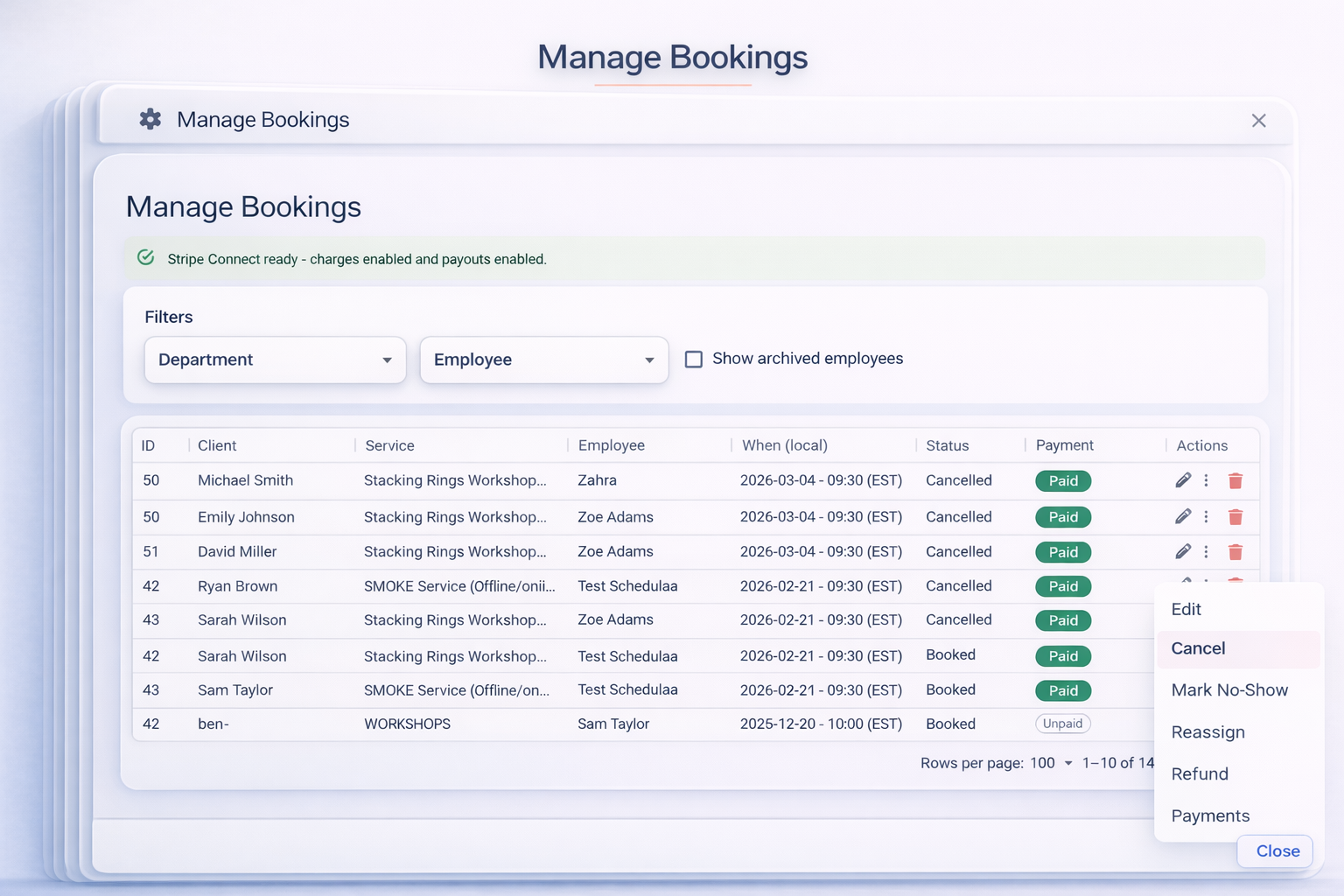
The fix is not to buy another point solution. The fix is to remove fragmentation.
HVAC teams need one operational system where the website, booking flow, scheduling, client records, estimates, invoices, payment links, and staff activity stay connected.
That is where Schedulaa fits. It gives HVAC companies a professional website, online booking, manager-created bookings, staff scheduling, time tracking, client records, estimates, invoices, work orders, payment links, and follow-up workflows in one platform.
Instead of treating dispatch, admin, and finance as separate departments with separate tools, Schedulaa keeps them in one operational flow.
What that looks like in practice for HVAC teams
A client can book online for maintenance or repair, or your office can create the booking for them if they still call in. The appointment stays linked to the client record instead of disappearing into a disconnected calendar.
Managers can assign the right employee based on availability and job context, not guesswork. That reduces back-and-forth with technicians and helps avoid schedule collisions.
If the job needs pricing before work starts, the team can send an estimate, follow up, and convert it into invoicing and payment steps inside the same client workflow.
If the job is already complete, the office can create the invoice, generate a payment link, or collect payment without rebuilding the client context from scratch.
And because the client record stays organized, follow-up emails, notes, document requests, service history, and billing status stay visible in one place.
Why this matters for small-to-growing HVAC companies
Large enterprise tools often feel too expensive or too heavy for HVAC companies with one to fifteen trucks. But spreadsheets, chat threads, and stitched-together apps stop working long before a team is large enough for enterprise software.
That leaves a big gap in the market: growing HVAC teams need something more connected than a simple booking app, but more practical and affordable than bloated field-service software.
Schedulaa is positioned well for that middle ground. You get the operational system that growing teams need without forcing your business into five disconnected subscriptions.
What to track if you want proof this is working
If you want to know whether scheduling fixes are improving the business, measure the operational outcomes, not just how full the calendar looks.
- Time from new lead or booking request to confirmed appointment.
- Average delay between completed job and invoice sent.
- Repeat visit and maintenance rebooking rate.
- Overtime hours caused by late schedule changes.
- Number of jobs per technician per day without quality drop.
- Payment speed after invoice or payment link is sent.
These numbers expose whether your scheduling process is driving healthy operations or just hiding the chaos for another week.
A simple HVAC growth playbook
Start with a branded website that explains your services clearly and captures booking requests professionally.
Let clients book online when appropriate, but keep manager-created bookings available for call-in customers.
Assign the right technician from one schedule, not several disconnected calendars.
Turn approved work into estimates, invoices, payment links, and follow-up actions without leaving the client record.
Use reminders, notes, and client history to reduce no-shows, speed up rebooking, and keep maintenance clients engaged.
The bottom line
HVAC companies usually do not have a lead problem first. They have an operational leakage problem first.
If scheduling is messy, every other part of the business feels harder: dispatch, staffing, invoicing, follow-up, and customer trust.
The companies that grow more cleanly are the ones that stop treating booking, scheduling, billing, and client management as separate systems.
If you want to stop losing money on preventable scheduling mistakes, the answer is not more admin effort. It is a more connected workflow.
Schedulaa gives HVAC companies that workflow in one place.
Recommended next step
Explore estimates, invoices, and payment links
See how Schedulaa helps service businesses send estimates, issue invoices, share payment links, and track payments.